
From the Litle Pups journal · Est. 2011
Can ai chat Make Every User Experience Different?
Yes, AI chat can make every user experience different because modern systems generate responses based on user context, preferences, language habits, and previous interactions. A 2024 AI Index report showed that generative AI adoption expanded across education, software, healthcare, and business within only two years. The same model can produce different answers for different people because users provide different goals, knowledge levels, and communication styles. Personalization changes AI from a general tool into a user-specific assistant.
AI chat systems have changed from fixed-response programs into adaptive communication platforms. Early chatbots mainly used predefined scripts, so users asking identical questions often received nearly identical answers. After the introduction of large language models around 2020, AI systems began generating responses based on context, probability patterns, and conversation history.
A 2023 Stanford University evaluation of foundation models showed that modern AI systems can handle a wide range of language tasks, including writing, coding, reasoning, and summarization. However, the model itself is only one part of the experience. The interaction between the user and the system shapes the final result.
Two people can ask the same question and receive different answers because they are not solving the same problem.
For example, when two users ask, “How should I learn programming?” the AI may provide completely different responses. A university student may receive a 6-month learning roadmap with Python projects, algorithms, and portfolio suggestions. A business owner may receive automation ideas focused on reducing repetitive work. A beginner with no technical background may receive basic explanations and simple practice tasks.
This difference comes from several types of personalization. The first is conversation context. AI can adjust its response according to information provided during the current discussion. If a user prefers short answers, the system can reduce explanation length. If a user requests academic detail, the response can include research references, technical terms, and structured analysis.
The second type is user preference adaptation. People communicate with AI in different ways. Some users want direct answers, while others prefer detailed explanations. Some ask for creative brainstorming, while others request strict factual summaries.
A study published in 2024 on human-AI interaction found that users often develop stable communication patterns with AI tools after repeated usage. Users who frequently request writing assistance usually build different interaction habits compared with users who mainly use AI for programming or data analysis.
| User type | Common AI usage | Typical response style |
|---|---|---|
| Student | Learning and research | Step-by-step explanations |
| Developer | Coding and debugging | Technical solutions |
| Writer | Content creation | Creative suggestions |
| Professional | Work assistance | Structured reports |
These differences become more noticeable when AI systems use memory features. Instead of treating every conversation as a separate event, some platforms allow AI to remember selected preferences, such as writing style, professional background, or frequently used formats.
A personalized AI assistant for a software engineer may focus on code quality, system design, and debugging methods. The same AI used by a marketing professional may focus on audience research, content planning, and communication style.
The ability to create different experiences also appears in creative fields. Writers, designers, and researchers often use AI differently because their goals are different. A novelist may ask AI to generate fictional characters and dialogue. A researcher may request literature organization and statistical interpretation.
In 2024, multimodal AI systems expanded this difference further by combining text, images, audio, and video understanding. Users no longer interact with AI only through written questions. They can upload images, describe problems verbally, or combine different information types in one conversation.
For example, a designer can upload a product image and ask for visual improvements. A student can upload a diagram and request an explanation. A researcher can provide a chart and ask for analysis. The same AI model creates different experiences because each user provides different materials.
Personalization depends not only on what AI knows, but also on how users communicate with it.
Education is one area where personalized AI has received significant attention. Traditional teaching methods often require one instructor to support many learners at the same time. AI tutors can provide different explanations according to each learner’s progress.
A 2023 study involving more than 1,000 students found that AI-supported learning tools improved learning engagement when students received customized feedback. Students who needed more basic support could receive additional examples, while advanced learners could explore more complex materials.
Healthcare applications show similar patterns. Patients have different questions, lifestyles, and information needs. An AI health assistant may provide medication reminders for one person, lifestyle suggestions for another, and appointment preparation support for another.
However, personalization also creates questions about privacy and reliability. A more customized AI experience usually requires more information about the user. According to a 2024 global survey by Deloitte, concerns about personal data use remained one of the main reasons some users hesitated to adopt AI services.
AI companies therefore need to balance personalization with user control. Users should understand what information is stored, how it is used, and how they can manage their preferences.
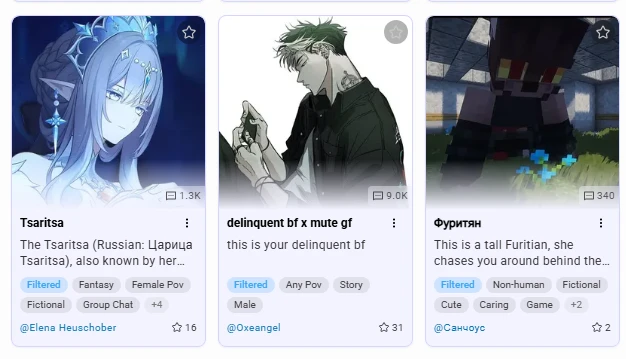
Another area where personalized AI has expanded is entertainment and social interaction. Some users use AI characters for storytelling, role-playing, or emotional conversations. For example, platforms offering AI character interaction have created communities around customized digital personalities. Related searches such as nsfw ai also show how users explore different forms of AI-generated interaction based on personal preferences and interests.
The future of AI chat will likely involve more individualized systems. Instead of millions of users receiving the same assistant experience, each person may have an AI assistant shaped by their communication style, work requirements, learning habits, and preferred level of detail.
| Development area | Current progress | Future direction |
|---|---|---|
| Memory systems | Store user preferences | Longer-term personalization |
| Multimodal AI | Understand text and images | More natural interaction |
| AI agents | Complete specific tasks | Personal digital assistants |
| Adaptive models | Adjust response styles | More individual experiences |
The difference between users will continue to grow as AI systems become better at understanding personal needs. A programmer, teacher, designer, and researcher may all use the same AI model but experience completely different interactions.
The future of AI chat is not one assistant serving everyone in the same way. It is a technology that adjusts itself to different people, tasks, and communication styles. As personalization improves, AI experiences will become increasingly unique while still being built on the same underlying technology.
Thinking about a tiny companion?
Meet the puppies waiting for their forever home.
Browse current available toy puppies, or start a reservation application and our team will guide you, one warm step at a time.